
The 2027 O-Level Physics Practical: What Examiners Really Want
The O-Level Physics practical exam (Paper 3) tests how students handle equipment, record data precisely and analyse results, not just their theory knowledge. Worth a significant 20% of the final grade for Pure Physics, this paper often causes anxiety because it feels less predictable than a written test. However, examiners are not looking for a perfect outcome. They are assessing a student’s scientific process and attention to detail.
For the 2027 O-Level Physics (Syllabus 6091) exam, success hinges on understanding the specific skills being marked. It’s about demonstrating careful methodology from start to finish.
Understanding The Practical Exam Format
Paper 3 is a hands-on assessment divided into two distinct parts, both compulsory:
- Section A (20 marks): This 55-minute section usually involves one or two shorter experiments focusing on core manipulation and observation skills.
- Section B (20 marks): Also 55 minutes, this section typically features a single, more in-depth experiment requiring extensive data tabulation, graph drawing and critical analysis.
The assessment objectives are heavily weighted towards execution. While Planning (P) an experiment accounts for 15% of the practical marks, the remaining 85% is dedicated to Manipulation, Measurement and Observation (MMO), Presentation of Data (PDO) and Analysis, Conclusions and Evaluation (ACE).
What Examiners Actually Look For: The Core Skills
Examiners follow a strict marking scheme that rewards methodical work and clear thinking. Here are the key areas your child needs to master.
Manipulation, Measurement And Observation (MMO)
This is about physical competence in the lab. Examiners watch to see if students can set up and use apparatus independently and safely. Apparatus must be secure. A wobbly retort stand or shifting lens will compromise every reading. Most importantly, all measurements must be recorded to the correct precision of the instrument. A digital voltmeter reading ‘1.23 V’ must be written as 1.23, not 1.2.
Presentation Of Data And Observations (PDO)
Clear data presentation is non-negotiable. This means constructing a neat table with proper column headers that include both the quantity and its unit, following the standard format (e.g. ‘Length / cm’ or ‘Time / s’). All raw readings within a single column must be recorded to the same number of decimal places. When it comes to graphing, points must be plotted accurately (within half a small square) and connected with a single smooth best-fit line or curve.
Analysis, Conclusions And Evaluation (ACE)
This is where understanding of Physics concepts comes into play. Students must be able to process their data, perform calculations showing intermediate steps and draw valid conclusions. The most challenging part is often the error analysis. Examiners want specific and plausible sources of error, not vague statements.
The #1 Mistake: Vague Vs Specific Error Analysis
One of the biggest differentiators between an average and a top-scoring student is the ability to identify and describe errors meaningfully. Examiners can spot generic, memorised answers immediately.
Here’s what to avoid and what to aim for:
- Vague: “There was parallax error.”
Specific: “The reading on the ruler was viewed from an angle, causing the measured length to appear shorter than its actual value.” - Vague: “The experiment was not accurate.”
Specific: “Heat was lost from the surface of the beaker to the surrounding air, which likely resulted in a lower final temperature reading and affected the calculated specific heat capacity.” - Vague: “Human reaction time error.”
Specific: “There was a delay in starting the stopwatch at the exact moment the ball was released, which could have made the recorded time slightly inconsistent across trials.”
While theory can be revised from textbooks, mastering practical skills like error analysis requires hands-on practice and targeted feedback. It is difficult for students to self-correct vague statements or imprecise graphing without an experienced eye to guide them. This is where structured guidance from a dedicated H2 Physics tutor or group tuition can provide that crucial feedback loop, building a strong foundation for both O-Levels and future studies.
A Practical Checklist For 2027 Exam Preparation
Here are actionable steps your child can take to prepare effectively:
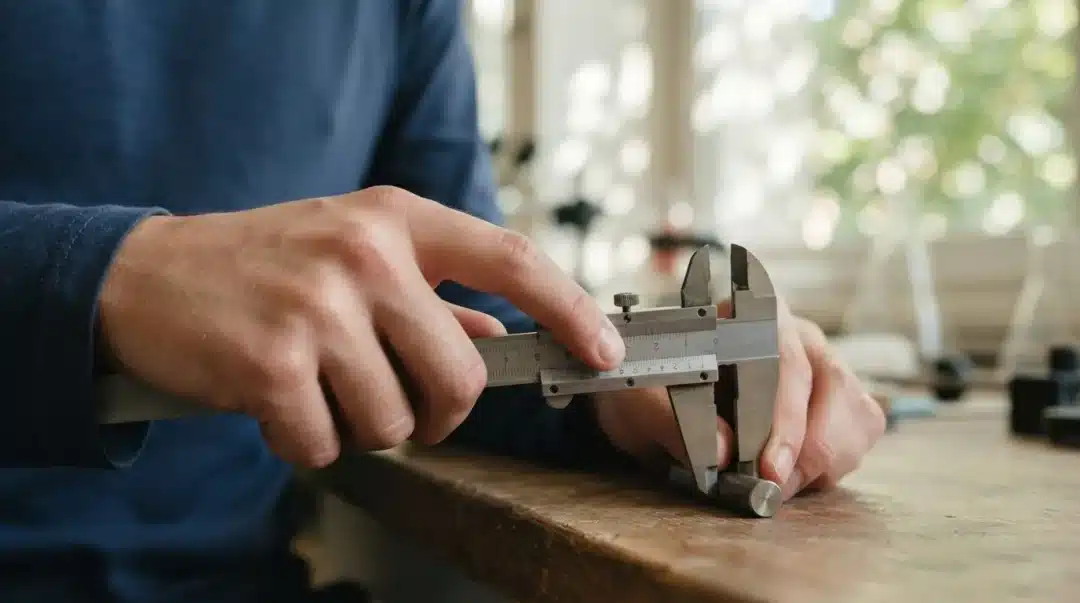
- Master the Instruments: Become familiar with the precision of common lab equipment like metre rules, vernier callipers and ammeters.
- Practice Under Time Pressure: The two 55-minute sections pass quickly. Practice completing past practical worksheets within this time limit to build speed and confidence.
- Highlight Key Instructions: In the exam, use a highlighter to mark crucial steps, quantities to be measured and the number of readings required.
- Don’t Draw from Memory: Always record what you actually observe, even if it seems ‘wrong’ or different from textbook examples. Examiners can tell when results are fabricated.
- Review Core Concepts: A strong grasp of theory helps in interpreting results and suggesting valid improvements for the experiment.
Building A Strong Foundation For JC Physics
The meticulous approach required for O-Level Physics experiments is not just for one exam. It is a fundamental scientific competency. These skills are essential for the more complex investigations in the IP curriculum and for any student aiming for success in A-Level H2 Physics. Mastering them now builds the confidence and rigour needed for future academic challenges.
Developing this systematic approach can be challenging alone. For parents seeking to help their child build this confidence for both O-Levels and beyond, exploring a specialist programme can provide the necessary structure and expert feedback.
Building strong study habits takes patience, especially when academic demands pick up. If your child needs an extra hand making difficult topics click, Geniebook offers targeted support across every stage. Find AI-personalised worksheets and live classes for primary and secondary school at geniebook.com or dedicated physics masterclasses through specialist tuition programmes.
Frequently Asked Questions
How is the O-Level Physics practical 2027 exam structured?
The O-Level Physics practical 2027 exam, known as Paper 3, is a compulsory hands-on assessment divided into two 55-minute sections. Section A contains one or two experiments focused on core manipulation and observation skills, while Section B consists of a single in-depth experiment requiring extensive data analysis and graph drawing.
What are the common assessment objectives for the Paper 3 Physics practical?
The Paper 3 Physics practical assesses four core scientific competencies including Manipulation, Measurement and Observation (MMO), Presentation of Data and Observations (PDO) and Analysis, Conclusions and Evaluation (ACE). These criteria account for 85% of the total practical marks, with Planning skills making up the remaining 15%.
What is the best way to write error analysis for an O-Level Physics experiment?
You can improve your error analysis for an O-Level Physics experiment by avoiding vague phrases like human error and instead stating specific, identifiable causes for inaccuracies. For example, explain precisely how a parallax error affected a reading or describe a specific source of heat loss in a thermal experiment to demonstrate a deeper understanding of the scientific process.
How does Physics Tuition Singapore help students prepare for practical exams?
Physics Tuition Singapore provides the expert guidance necessary to master hands-on practical skills like accurate graphing and precise error analysis that are difficult to refine through independent study. A tutor offers the critical feedback loop required to correct methodology and improve confidence before sitting for the actual Paper 3 exam.
What are some effective tips for the O-Level Physics practical 2027?
Effective preparation for the O-Level Physics practical 2027 involves becoming familiar with the precision of standard lab equipment, practising timed past papers to manage the 55-minute section limits and highlighting key instructions during the exam. Students should also focus on recording raw observations accurately rather than trying to make data fit expected textbook results.

